| August 28, 2026 |
Who’s Regulating the Regulators?
The Regulatory Squeeze on American Agriculture and Private Property
| For years, we have warned that some of the greatest threats facing farmers, ranchers, animal owners, and rural landowners will never appear on a ballot. They arrive through regulations, agency interpretations, permitting requirements, environmental designations, administrative enforcement actions, and lawsuits. Consider what is happening to Wade and Teresa King in Washington State. Their family has ranched the same land since the 1950s. After maintaining what the Kings say are historic stock water ponds, the Washington State Department of Ecology declared the areas regulated wetlands, imposed a $267,540 penalty, and issued restoration orders that could reportedly cost the family more than $3.7 million to satisfy. The Kings disputed the state’s claims. But even more troubling is how they are being forced to defend themselves. Their challenge to the agency’s enforcement action proceeds through an administrative tribunal that cannot provide them a jury trial. Their constitutional fight is now headed to the Washington State Court of Appeals. Then there is Point Reyes, California Point Reyes National Seashore was created in an environment where conservation and working agriculture were intended to coexist. Generations of ranching families continued producing food while preserving one of America’s most iconic landscapes in northern California. What makes the Point Reyes story even more troubling is the history behind it. When the federal government acquired these ranch properties for inclusion in the National Seashore, ranching families agreed to sell with the understanding that working the farms would continue through retained use-and-occupancy rights and, later, federal leases and permits. In other words, the creation of Point Reyes was not originally presented as a choice between conservation and agriculture. The bargain was that the landscape could be protected while the ranching families continued to work the land. That history makes what happened in recent years so important. The families who once cooperated with the federal government to preserve Point Reyes ultimately found themselves fighting to preserve the very agricultural operations that had been part of the landscape the government originally sought to protect. Today, Point Reyes ranching families are winding down operations following years of environmental litigation and a settlement involving the National Park Service, environmental organizations, ranchers, and compensation provided by The Nature Conservancy. Think about that for a moment. Families who helped preserve a working agricultural landscape are leaving it. And these are hardly isolated examples. Another Washington state farmer, Ron Fodé, is now before the Washington Supreme Court arguing that the Department of Ecology penalized him while relying upon an unpublished internal agency deadline and without providing assistance he says state law required before enforcement. In Wyoming, farmer David Hamilton faced the prospect of enormous federal Clean Water Act penalties after restoring a nearly century-old irrigation ditch on his property. His case has helped prompt federal legislation intended to restore agricultural exemptions Congress originally provided under the Clean Water Act. Across the Midwest, farmers and ranchers have spent years fighting eminent domain associated with carbon-capture pipelines that would cross privately owned agricultural land. Different states. Different agencies. Different laws. But the pattern deserves our attention. How Can This Happen in America? We often think our rights are threatened only when Congress or a state legislature passes a bad law. That is no longer case. Modern government exercises enormous power through the administrative state. Legislatures enact broad statutes. Agencies interpret them. Regulators write rules and policies. Administrative tribunals adjudicate disputes. Environmental organizations sue agencies. Settlements can subsequently determine how land will be managed. By the time the individual farmer or rancher realizes what is happening, the fight may no longer be taking place in the legislature at all. It may be taking place before an administrative hearing board, regulatory agency, federal judge, or through a settlement negotiated among government agencies and well-funded organizations. Is This “Sustainable Development in Action?” International initiatives such as the United Nations’ Agenda 2030 promote goals involving climate, biodiversity, so-called land and water conservation, agriculture, and sustainable development. Those UN Sustainable Development Goals are not legally binding upon American citizens. But did the United Nations urge Washington regulators to prosecute the King family, and did it order the ranches at Point Reyes be closed? Americans should always be willing to ask an important question:How much of today’s domestic environmental and land-use policy reflects a governing philosophy in which private property and productive human use of the land increasingly becomes subordinate to broader climate, biodiversity, and “sustainability” objectives, all of which are counter to private private rights, farming, and ranching. Whatever label we put on it, the consequences are real. When maintaining a stock pond can trigger millions of dollars in potential costs, when working ranches disappear from land they have occupied for generations, when farmers must fight government agencies simply to irrigate their crops, and when agricultural landowners must defend their property against condemnation, we have moved far beyond a debate about environmental protection. We are talking about the future of ownership of private property and American agriculture. And that raises the most important question of all: Who is next? Today it may be a cattle rancher, a dairy farmer, or a landowner with a stock pond. Tomorrow it could be an animal breeder, horse owner, livestock auction, exotic animal owner or exhibitor, pet business, or anyone whose livelihood depends upon animals and private property. That is precisely why The Cavalry Group remains engaged not only legislatively, but also in regulatory and legal matters affecting our members. Protecting animal enterprise means watching all three. Unfortunately, the greatest threat isn’t always the legislation being debated under the Capitol dome. It’s the regulation that comes out of the new laws, the regulatory agency’s decisions, or enforcement actions that never received a vote at all. And that leaves every American with a question we can no longer afford to ignore: Who is regulating the regulators? |
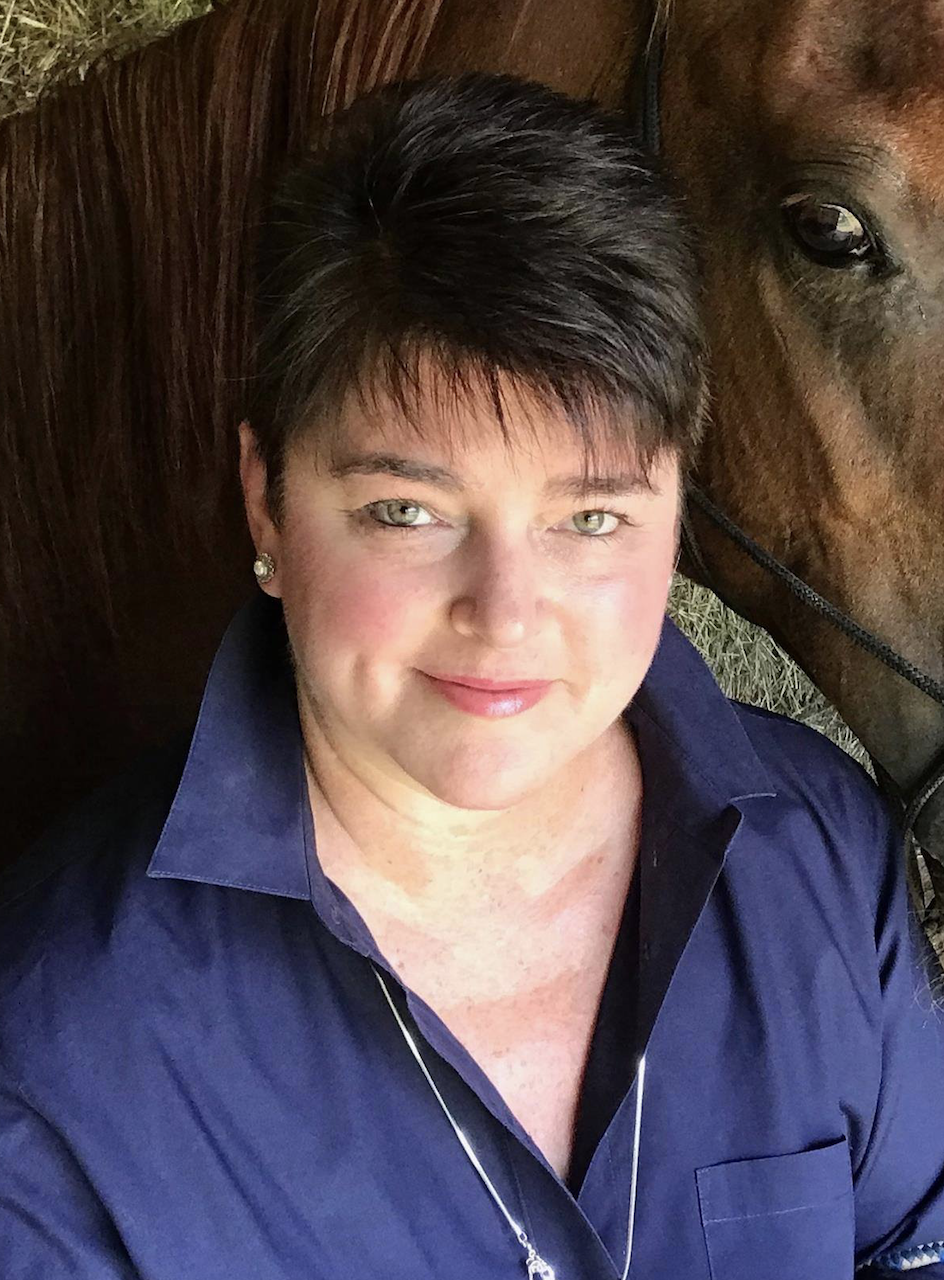 Your friend in the fight, Mindy PattersonPresidentThe Cavalry Group |
The Member Portal provides our members access to our expanding Member Advocacy Resource Center, including legislative resources, advocacy tools, member materials, educational content, and soon our new Legislative Command Center, coming this fall.
If you would like to sign up for a membership, we hope you will so we have the resources to continue the fight at the local, state, and federal levels.
How to Sign up:
- Go to www.thecavalrygroup.com and click Member Login.
- At the sign-in screen, click “Create” under “Don’t have an account?”
- Once logged in, go to Me → Membership.
We cannot continue this fight without you, so we hope you will renew today and stand with us as we prepare for the battles ahead.